Most people think a septic system is just a tank in the ground.
It is not.
A septic system is a biological treatment system designed to treat wastewater safely and return it to the environment.
When a septic system is properly designed, installed, and maintained, it can be a long-term solution for a property.
Request Septic Design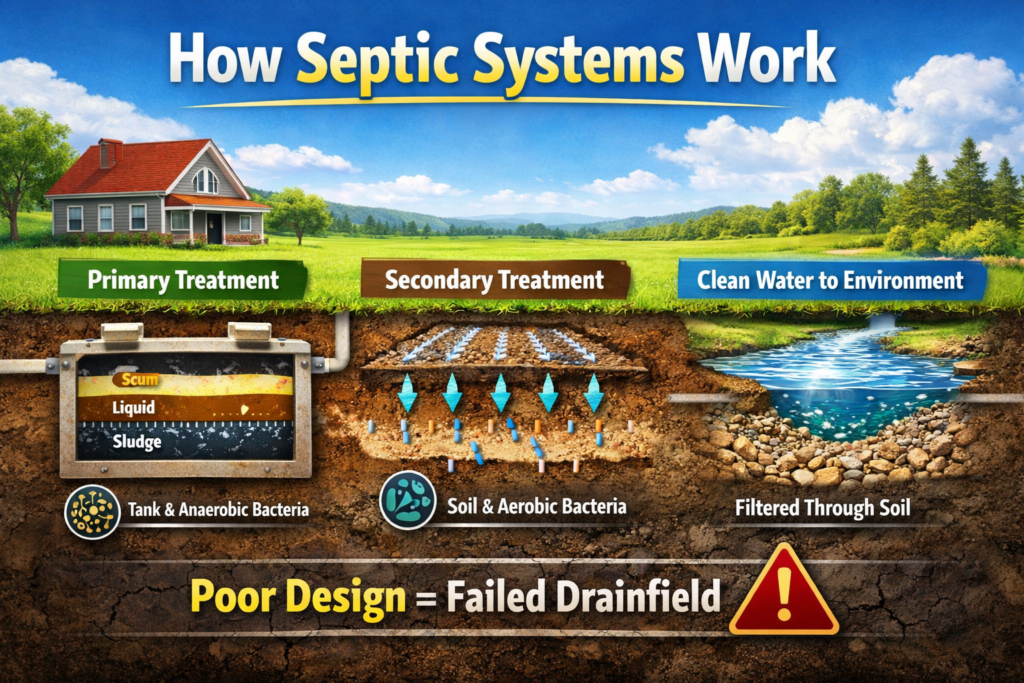
A Septic System Is More Than a Tank
A common misconception is that every onsite wastewater system is just a “septic tank.” In reality, the tank is only one part of the treatment process. Onsite systems often include different methods of sewage treatment, and the system does not simply “dispose” of wastewater — it treats it and returns it to the environment.
That matters because good septic design is not about putting in the biggest tank possible. It is about making sure the entire system works with the soil, the site, and the amount of wastewater the property produces.
Before a septic system can be installed, it must be properly planned and engineered. Learn more about our septic system design services to see how the process starts.
Step 1: Wastewater Leaves the Home
Every time you flush a toilet, take a shower, run the dishwasher, or do laundry, wastewater leaves the home and enters the septic system.
This wastewater contains more than water. It also contains solids, organic material, and other contaminants that must be treated before the water can safely enter the soil.
Engineers often look at measurements such as BOD5, TSS, and FOG to better understand the strength of the wastewater and what the system needs to handle.
Step 2: Primary Treatment Happens in the Tank
The septic tank provides the first stage of treatment, often called primary treatment. In the tank, raw sewage separates into layers:
- Sludge settles to the bottom
- Liquid remains in the middle
- Scum floats to the top
Inside the tank, anaerobic bacteria begin breaking down the solids. This reduces some of the waste, but the liquid leaving the tank still contains organics, pathogens, and suspended material.
In other words, the wastewater is only partially treated at this point.
Step 3: Secondary Treatment Happens in the Soil
After leaving the tank, the effluent moves to the drainfield. This is where the soil becomes part of the treatment system.
In the soil, aerobic bacteria continue the treatment process and help transform wastewater into more stable compounds. The soil also helps filter and assimilate the flow before it reaches groundwater.
This is one of the most important things homeowners need to understand:
The drainfield is not just where water goes. The soil is actively helping treat the wastewater.
These factors are critical when creating a properly functioning system. Our septic system design process takes all of these variables into account to ensure long-term performance.
Why Soil Matters So Much
Not all soils can handle wastewater the same way.
Some deeper, more suitable soils may be able to handle higher-strength effluent, while other soils may be overloaded much more easily. Factors like soil structure, air content, and mineralogy affect how well the soil can treat effluent.
That is why septic design should start with the receiving environment — and for most onsite systems, the receiving environment is the soil.
This is also why two properties next door to each other may not need the same septic design.
What Causes Septic System Failure?
A septic system can fail when the soil is asked to handle more than it can reasonably absorb and treat.
Common causes include:
- Overloading the soil
- Wastewater that is not treated enough before it reaches the drainfield
- Poor site evaluation
- Using the wrong system for the property
When treatment is not matched to the site, the result can be a failing drainfield, surfacing effluent, odors, and reduced long-term performance.
Why Engineering Matters
A septic system should not be designed by guesswork.
Good design considers more than just tank size. It also considers wastewater strength, hydraulic loading, retention time, peak flow, soil conditions, and the system’s long-term ability to perform.
The goal is simple: the level of treatment should match the soil’s ability to assimilate the flow without becoming overloaded.
That engineering mindset helps protect your:
- Drainfield
- Property
- Groundwater
- Long-term system performance
Common Septic Myths
Myth: A septic system is just a disposal system.
Not really. Onsite systems are designed to treat wastewater and return it to the environment.
Myth: All septic systems are the same.
They are not. Different sites, soils, wastewater strengths, and treatment needs can require different solutions.
Myth: Septic systems are only temporary.
When properly designed, installed, and maintained, an onsite system can be a long-term solution.
Myth: Septic systems are bad for the environment.
A properly functioning onsite wastewater system can be an environmentally responsible solution because it treats wastewater onsite and works with natural biological processes.
Our Approach
At RSH Engineering & Design, septic system design starts with understanding the site.
We look at the property, the soil, the treatment needs, and the system’s long-term performance. We do not believe in one-size-fits-all solutions, because the wrong design can overload the soil and shorten the life of the system.
A good septic system works because the design matches the land.
Need Help With a Septic System Design?
Whether you are building a new home, replacing a failing system, or trying to understand what your property needs, RSH Engineering & Design can help.
Understanding how septic systems work is just one part of the process. If you’re planning a new build or need a system designed for your property, explore our septic system design services in Eastern Missouri.
Contact us today to discuss your site and septic design needs.